
-
By admin
-
November 15, 2025
- 0 Comment
CNC Turning vs Milling: What’s the Difference and When Should You Use Each?
Introduction
Understanding the difference between CNC turning vs milling is fundamental in modern manufacturing. Both processes are widely used for producing precision components, yet they operate in very different ways and are suited to different types of parts.
Choosing the right process is not just a technical decision. It directly impacts production efficiency, cost per part, and overall machining performance. For manufacturers working across industries such as oil and gas, aerospace, and general engineering, selecting the correct machining method is essential for achieving consistent, high-quality results.
What is CNC Turning?
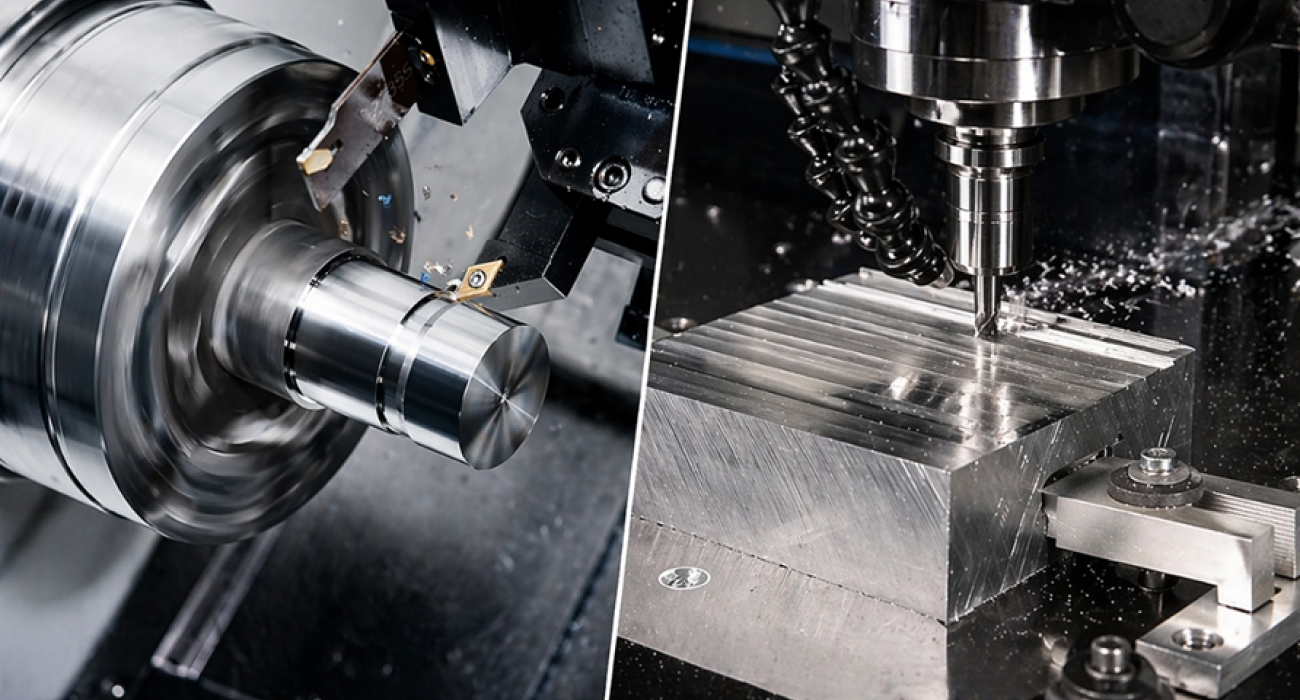
CNC turning is a machining process where the workpiece rotates while a cutting tool remains stationary. Material is removed as the tool moves along the surface of the rotating part, shaping it into the desired form.
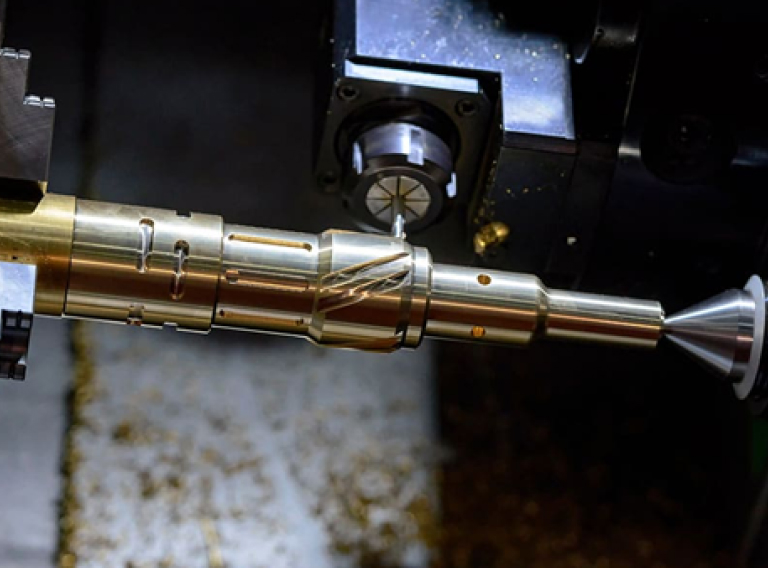
This process is typically performed on CNC lathes and is best suited for producing cylindrical or round components. Common examples include shafts, bushings, and threaded parts.
Because the motion of the workpiece is continuous, CNC turning is highly efficient for symmetrical components and allows for excellent surface finishes with tight tolerances.
What is CNC Milling?
CNC milling works in the opposite way. The cutting tool rotates while the workpiece remains fixed. The tool moves across multiple axes to remove material and create the desired geometry.
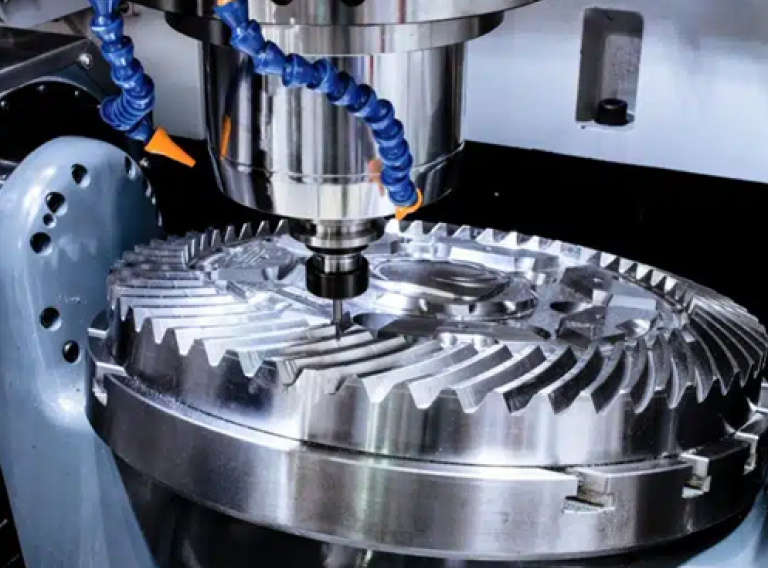
This allows for much greater flexibility in part design. Milling is ideal for producing complex shapes, flat surfaces, slots, pockets, and intricate geometries that cannot be achieved through turning alone.
Modern CNC milling machines, including multi-axis systems, can handle highly detailed components with a high level of precision.
Key Differences Between Turning and Milling
The main difference between CNC turning vs milling lies in how the material is cut. In turning, the part rotates. In milling, the tool rotates.
This fundamental distinction determines the type of components each process is best suited for. Turning is generally used for round or cylindrical parts, while milling is used for more complex geometries.
In terms of efficiency, turning is often faster and more cost-effective for high-volume production of symmetrical components. Milling, on the other hand, offers greater versatility and is essential for parts that require detailed features or multiple surfaces.
When Should You Use CNC Turning?
CNC turning is the preferred choice when working with components that are primarily cylindrical. It is particularly effective for high-volume production where consistency and speed are important.
Industries such as oil and gas and heavy engineering often rely on turning for producing shafts, valves, and other rotational parts. The process delivers reliable accuracy and repeatability, making it suitable for demanding industrial applications.
Machines from manufacturers such as SMEC and Neway are commonly used for these types of operations, offering stable performance and precision across a wide range of machining requirements.
When Should You Use CNC Milling?
CNC milling is used when parts require complex geometries or multiple machining operations. It is essential for components with flat surfaces, intricate detailing, or features that cannot be produced through rotation alone.
This process is widely used in aerospace, automotive, and precision engineering industries where design complexity is high. Multi-axis milling systems allow manufacturers to produce advanced components with fewer setups, improving both accuracy and efficiency.
Milling is also often combined with turning in more advanced machining environments to create complete parts in a single workflow.
Combining Turning and Milling: The Role of Multi-Tasking Machines
In many modern production environments, the distinction between turning and milling is becoming less rigid. Advanced machines now combine both processes into a single setup.
Multi-tasking systems, such as MILLTURN machines from WFL, allow manufacturers to perform turning, milling, drilling, and other operations on one platform. This reduces handling time, improves precision, and significantly increases overall productivity.
For complex or high-value components, this integrated approach can deliver major efficiency gains compared to using separate machines.
Cost and Efficiency Considerations
When comparing CNC turning vs milling, cost is not just about machine time. It includes setup, tooling, labour, and the number of operations required to complete a part.
Turning is generally more cost-effective for simpler, rotational parts due to its speed and efficiency. Milling may involve longer machining times, but it reduces the need for multiple setups when producing complex components.
In many cases, combining both processes through integrated systems can offer the best balance between cost and performance.
Conclusion
Both CNC turning and milling are essential machining processes, each suited to different applications. Turning offers speed and efficiency for cylindrical parts, while milling provides the flexibility needed for complex geometries.
Understanding the difference between CNC turning vs milling allows manufacturers to select the right process for their application, improving production efficiency and overall part quality.
As manufacturing continues to evolve, the integration of both processes into advanced machining systems is becoming increasingly important for staying competitive.
Not sure whether your components require turning, milling, or both?
Speak to our team to explore the right machining solution for your application.