
-
By admin
-
October 20, 2025
- 0 Comment
Nitrogen vs Oxygen in Laser Cutting: Which Gas Should You Use?
Introduction
When comparing nitrogen vs oxygen in laser cutting, many manufacturers focus only on cutting speed or cost. In reality, the choice of assist gas has a much wider impact, affecting edge quality, post-processing, and overall production efficiency.
Both nitrogen and oxygen are widely used in fiber laser cutting, but they behave very differently during the process. Understanding when to use each gas is essential for achieving the right balance between performance, quality, and cost per part.
What Role Does Assist Gas Play in Laser Cutting?
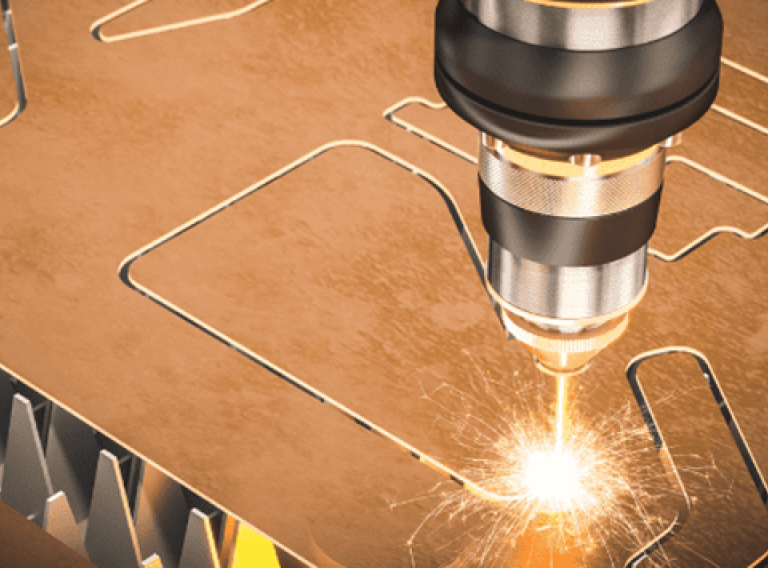
In laser cutting, assist gas is used to remove molten material from the cut while also influencing how the material reacts during processing. It directly affects cutting speed, edge finish, and the amount of heat introduced into the material.
The key difference between nitrogen and oxygen lies in how they interact with the material. Nitrogen is inert and does not react, while oxygen actively supports combustion. This difference is what drives the performance characteristics of each gas.
Nitrogen in Laser Cutting
Nitrogen is commonly used in applications where edge quality and surface finish are critical. Because it is an inert gas, it does not react with the material during cutting. Instead, it simply assists in removing molten material from the cut.
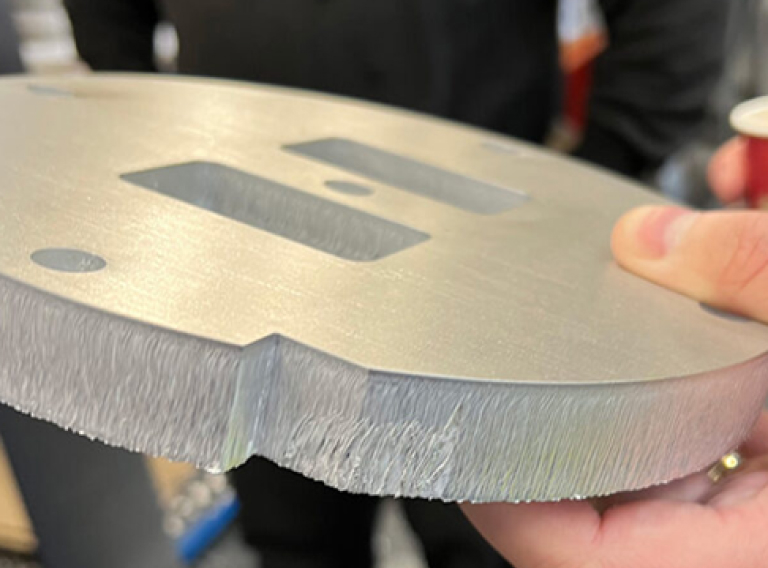
This results in clean, oxide-free edges with no discoloration. For materials such as stainless steel and aluminium, this is particularly important, as it allows parts to move directly to downstream processes like welding or coating without additional preparation.
However, because nitrogen does not contribute to the cutting process chemically, it requires higher pressure and relies entirely on the laser’s energy. This can lead to higher gas consumption and increased operating costs, particularly when using bulk gas supply.
Oxygen in Laser Cutting
Oxygen behaves very differently. As a reactive gas, it supports combustion during the cutting process. When oxygen reacts with the material, it generates additional heat, which helps the laser cut through the material more quickly.
This makes oxygen particularly effective for cutting mild steel, especially at greater thicknesses. The increased cutting speed can significantly improve productivity in heavy fabrication environments.
However, this reaction also leads to oxidation along the cut edge. The result is a rougher finish, often requiring additional grinding or cleaning before further processing. For applications where edge quality matters, this can offset the initial cost and speed advantages.
Key Differences Between Nitrogen and Oxygen
The decision between nitrogen and oxygen in laser cutting ultimately comes down to how you prioritise quality versus speed and cost.
Nitrogen provides a clean, high-quality finish with minimal post-processing, making it ideal for precision applications. Oxygen, on the other hand, offers faster cutting speeds and lower gas costs, but produces oxidised edges that often require additional work.
In practical terms, nitrogen is typically used for stainless steel, aluminium, and applications where appearance and precision are critical. Oxygen is more commonly used for mild steel and structural components where speed and cost are prioritised over finish.
Cost Considerations: Beyond Gas Price
When evaluating nitrogen vs oxygen in laser cutting, it is important to look beyond the cost of the gas itself.
Oxygen is generally cheaper and requires lower flow rates, which makes it attractive from an operating cost perspective. However, the need for additional finishing processes can increase labour time and reduce overall efficiency.
Nitrogen has a higher upfront cost, particularly when supplied in cylinders or bulk. However, it reduces or eliminates post-processing, improves consistency, and can lower total cost per part in high-precision production environments.
This is why many manufacturers evaluate cost based on the full production cycle, not just gas consumption
On-Site Nitrogen Generation
For operations that rely heavily on nitrogen, gas supply can become a major operational constraint.
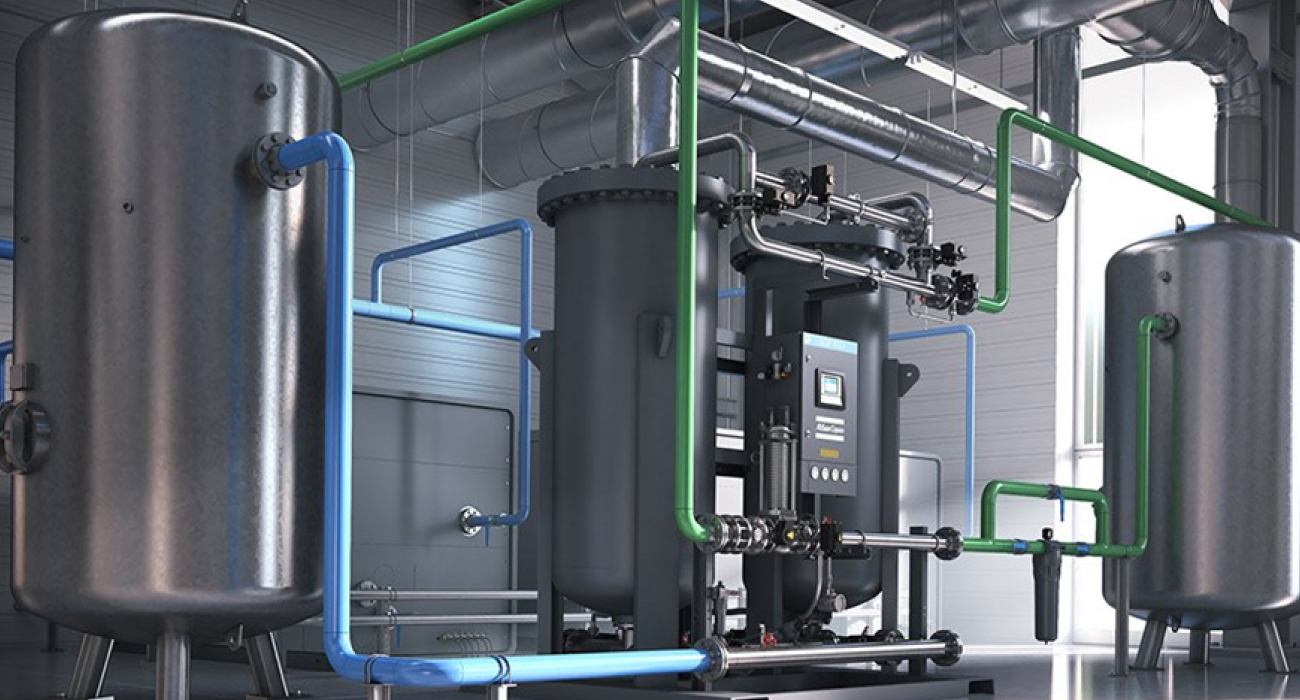
On-site nitrogen generation systems allow manufacturers to produce high-purity nitrogen directly within their facility. This eliminates dependency on deliveries, reduces long-term gas costs, and ensures a consistent supply for continuous production.
Systems such as those provided by Atlas Copco are commonly used in high-volume environments where reliability and cost control are critical.
Which Gas Should You Choose?
The choice between nitrogen and oxygen depends on your specific production requirements.
If your priority is edge quality, precision, and minimal post-processing, nitrogen is the better option. It is particularly suited to applications involving stainless steel, aluminium, and components that require coating or welding.
If your focus is cutting speed and lower upfront cost, especially when working with mild steel, oxygen may be more suitable. It is widely used in structural fabrication and heavy-duty applications where finish is less critical.
In many cases, manufacturers use both gases, selecting the most appropriate option depending on the material and application.
Conclusion
Understanding the differences between nitrogen and oxygen in laser cutting is essential for optimising both performance and cost. Each gas offers distinct advantages, and the right choice depends on how your production balances speed, quality, and efficiency.
Selecting the appropriate gas — and ensuring a reliable supply — can have a significant impact on overall productivity and long-term operating costs.
Not sure whether nitrogen or oxygen is right for your application?
Speak to our team or explore on-site nitrogen generation solutions to improve cutting performance and reduce operating costs.